Friday, October 18, 2019
CPAM Conference ~ 10/17/19, General Membership meeting
The meeting was called to order at 12:25 pm by President Andy Kozal
The following reports were given:
A.) Presidents report: Andy Kozal
- CPTED upcoming training session Dec. 3rd -5th, '19, Kent County Sheriff's Office, Grand Rapids
- Recognition of Charles Roetman donation
- Election of Officers per the bylaws, for 2-year terms.
B.) Vice Presidents Report: Adam Nothelfer
- Additional Regional Rep. Welcomed a new representative from the East Region
- Request for training ideas from the body
C.) Secretaries Report: Julie Niemchick
- Past meeting minutes are posted on the website.
D.) Treasurer Report: *Financials will be published in the official minutes.
E.) Training Committee: Sandi Jones / Andrew Kozal
- 2020 Conference planning * seeking recommendations from the body
- Planning for 2021
F.) General Membership Quarterly Trainings:
-December 2019, CPTED
-March 2020, Host site and Topic being planned
Awards Committee Update: Information posted on the website
Mini-Grant / membership- Rick Smiednendorf
-Members were encouraged to apply for the CPAM mini-grants the application is posted on the website.
G.) - Legislative Update: Ritchie Coleman * a blog post on MI legislation of Senate / House of Reps bills that are supported/opposed by the MI Chiefs of Police. Information was provided on the use of the "Ring App - Neighbors", DHS " See Something Say Something", MI Attorney Generals, town hall meetings on "Elder Abuse".
H.) -New Business:
2020-2022 Board Elections, Elections Chair Rich Smiedendorf
Members polled for nominations from the floor.
* There was one nomination for the office of Treasurer which was declined.
Unanimous consent for the following members to serve another 2-year term:
Andy Kozal, President
Adam Nothelfer, Vice President
Julie Niemcchick, Secretary
Dave Robinson, Treasurer
Meeting adjourned
* This is a summary of the meeting, not the official minutes.
CPAM website
Thursday, October 17, 2019
CPAM 2019, Conference Day #3, "Stop the Bleed"
"Stop the Bleed" a hands-on program offered to CPAM members by the Wyoming Department of Public Safety's Fire Fighter Brad Dornbos and U of M Metro Trauma Team nurse Ms. Jenna Heraghty.This presentation focused on why emergency responders, community members, teachers, faith communities need to have knowledge of how to stop bleeding
These locations are considered "soft targets" and the increased incidents of medical emergencies are on the rise and being prepared and train to respond to work-related injuries, home injuries, and mass shooting events are now more important than ever.
The ABC's of Bleeding was explained: Alert Bleeding, Compression. CPAM members were provided with hands-on use of tourniquets and how to apply them. We were also provided with an opportunity to practice using the tourniquets, stuffing a wound and to build a stop the bleed kit. The buckets were donated by Lowes and medical supplies by the Metro U of M Trauma Center. The medical supply buckets are in schools, churches, businesses, and now with CPAM members. Thanks!
For more information on the "Stop the Bleed" programs contact your local Police / Fire Department or your local hospital.
Interview with Wyoming MI D.P.S. Fire Fighter Brad Dornbos
CPAM Conference 2019 , Day# 3, Averted School Violence Project
Mr. Frank Straub, Ph.D, is the director of Strategic Studies and the Center for Mass Violence Response Studies at the National Police Foundation a non-profit organization that studies ways to improve policing through science and innovation. Mr. Straub has conducted in-depth studies of the San Bernardino terrorist attack, the Kalamazoo mass shooting, and the Orlando Pluse nightclub shooting, and is currently leading the Marjory Stoneman Douglass HS shooting review.
Mr. Straub shared his personal experience of what happened on Sept. 11th, 2001, while working for the NYPD. He and many others responded to the World Trade Center towers to assist with evacuation and saving lives. The personal details shared as an eye witness and loss of close friends were moving and clearly had the audience riveted, because we watched the coverage in horror but to hear a first-hand account was moving.
Mr. Straub shared the findings of a series of high profile shootings, participants were provided with a copy of " A Comparison of Averted and Completed School Attacks from the Police Foundations Averted School Violence Database. This detailed report gives details on the age range of attackers, locations (high schools #1), and lessons learned.
Mr. Straub stressed the importance of "Averting Near Misses" when someone "Sees something, Says something and adding "do something". In our school's students who hear something, see something on social media has helped stop an attack before it happens. 58.8% of attacks are planned by one person if more are involved its a high probability that someone will tell.
In the report, there is information on how social media has played a significant role in providing a safe place for those planning attacks.
Mr. Straub provided insight into the challenges of our school administrators and teachers. Will, there be more opportunities to learn the warning signs of troubled students, developing more of a relationship with law enforcement and to create a "threat assessment team"? Another recommendation is to create a "mental health incident command" to respond to these incidents for long term care of all involved, students, parents, teachers, 1st responders, and all disciplines providing care.
Schools districts are being encouraged to expand the active shooter drills to included all health releated disciplines and also to have more table top drills.
To access the report and more click the link below:
Averted School Violence, Police Foundation
Mr. Straub shared his personal experience of what happened on Sept. 11th, 2001, while working for the NYPD. He and many others responded to the World Trade Center towers to assist with evacuation and saving lives. The personal details shared as an eye witness and loss of close friends were moving and clearly had the audience riveted, because we watched the coverage in horror but to hear a first-hand account was moving.
Mr. Straub shared the findings of a series of high profile shootings, participants were provided with a copy of " A Comparison of Averted and Completed School Attacks from the Police Foundations Averted School Violence Database. This detailed report gives details on the age range of attackers, locations (high schools #1), and lessons learned.
Mr. Straub stressed the importance of "Averting Near Misses" when someone "Sees something, Says something and adding "do something". In our school's students who hear something, see something on social media has helped stop an attack before it happens. 58.8% of attacks are planned by one person if more are involved its a high probability that someone will tell.
In the report, there is information on how social media has played a significant role in providing a safe place for those planning attacks.
Mr. Straub provided insight into the challenges of our school administrators and teachers. Will, there be more opportunities to learn the warning signs of troubled students, developing more of a relationship with law enforcement and to create a "threat assessment team"? Another recommendation is to create a "mental health incident command" to respond to these incidents for long term care of all involved, students, parents, teachers, 1st responders, and all disciplines providing care.
Schools districts are being encouraged to expand the active shooter drills to included all health releated disciplines and also to have more table top drills.
To access the report and more click the link below:
Averted School Violence, Police Foundation
CPAM Conference Day #2, Session - Marijuana in Michigan
Mr. Andrew Brisbo, was appointed by Governor Whitmer to lead the Marijuana Regulatory Agency (MRA) the successor to the Bureau of Marijuana Regulation. The agency oversees the Medical Marijuana Facilities Licensing Act and Marijuana Tracking Act as well as the medical marijuana register card program.
Programs: Adult Use, MI Medical Marijuana Patient Care Givers, Medical Marijuana Facilities, and Social Equity Programs.
Mr. Adrews stated that there are currently 276,970 patients (453) minors and 37,878 caregivers in the state of Michigan. There is an online application for all involved which has helped to streamline the process.
The applications and fees that are paid once approved range from $6,000.00 to $67, 000.00.
Municipalities have the option to "Opt-In" or vote not to allow the facilities in their communities
For more information, on the application process click on the link to the LARA:
MI Medical Marijuana Facility Licensing
Mr. Steve Rau, Senior Regulation agent of the Marijuana Regulatory Agency's Enforcement section provided an overview of inspection of the facilities and code enforcement. Locations that apply and granted a license must follow the guidelines and use of a "Metric" tracking system to track from seed-to-plant to sale.
Mr. Bill Couosins, an experienced security consultant and founder of WJ Cousins and Associates provided an overview of his business that provides Security Consulting, Medical Marihuana Consulting, and Investigations. His company has worked with licensed operators to make sure that their facilities meet the strict state standards on security the building, crime analysis, vaults/safes, secure windows, and alarms.
Click the link for company information: WJ Cousins & Associates
Programs: Adult Use, MI Medical Marijuana Patient Care Givers, Medical Marijuana Facilities, and Social Equity Programs.
Mr. Adrews stated that there are currently 276,970 patients (453) minors and 37,878 caregivers in the state of Michigan. There is an online application for all involved which has helped to streamline the process.
The applications and fees that are paid once approved range from $6,000.00 to $67, 000.00.
Municipalities have the option to "Opt-In" or vote not to allow the facilities in their communities
For more information, on the application process click on the link to the LARA:
MI Medical Marijuana Facility Licensing
Mr. Steve Rau, Senior Regulation agent of the Marijuana Regulatory Agency's Enforcement section provided an overview of inspection of the facilities and code enforcement. Locations that apply and granted a license must follow the guidelines and use of a "Metric" tracking system to track from seed-to-plant to sale.
Mr. Bill Couosins, an experienced security consultant and founder of WJ Cousins and Associates provided an overview of his business that provides Security Consulting, Medical Marihuana Consulting, and Investigations. His company has worked with licensed operators to make sure that their facilities meet the strict state standards on security the building, crime analysis, vaults/safes, secure windows, and alarms.
Click the link for company information: WJ Cousins & Associates
Wednesday, October 16, 2019
CPAM Conference,Day #2 John Bostain, "Delivering Effective Presentations
Today CPAM members were provided with an overview of how to deliver effective presentations. The most important aspect of presenting:
Mr. Bostain, who trains law enforcement personnel in the most effective methods of assuring that the audience will learn, embrace and use the information being presented.

As a presenter understanding your style of presenting is important which are you (3 of 4)?

We learned the ABC's of Behavioral Change; your goal as a presenter is to have your audience learn content from your spoken words not your visual bullet points in a P.P. presentation.
What are the ABC's of Behavior change?:
Learn the Golden Rule - "It's not about You"
Mr. Bostain, who trains law enforcement personnel in the most effective methods of assuring that the audience will learn, embrace and use the information being presented.


We learned the ABC's of Behavioral Change; your goal as a presenter is to have your audience learn content from your spoken words not your visual bullet points in a P.P. presentation.
What are the ABC's of Behavior change?:
A. Antecedent B. Behavior C. Consequences
Resource: The Storytellers SECRET, Carmen Galleo (Ted Talk)
For more information on the presentation and tips click the link below for their website:
Jon, share additional tips w/ Rich Coleman, CPAM
Tuesday, October 15, 2019
CPAM 2019 , Outstanding Achievers Award Winners
The Crime Prevention Association of MI kicked off the 2019 conference with the awards ceremony and dinner. We had the Grand Traverse Honor Guard present the colors and a welcome from the Deputy Chief of Grand Traverse County Sheriff’s Department.
Winners:
Outstanding Crime Prevention Practioner of the year: Captain Mike Maycroft Grand Rapids Police Department.
Volunteer of the Year: Mr. Charles Roetman

Outstanding Corporate Award. Ms. LeeAnn Rodgers, Standale Pizza Hut
Outstanding Youth Award: Ms. Emily Whilden, Cedard Spring Public Schools

Special Project in the Field of Crime Prevention: Detective Jon Zabick, & Sgt. Robert Manar, Novi Police Department
Our keynote speaker Lt. Brian Murphy spoke on “Adversity comes to us all, Mindset and Will, Determined the Outcome”. Lt Murphy was the victim of a shooting at the Oak Creek Sikh Temple, Oak Creek Wisconsin. He survived being shot 15 times and lived to tell his amazing story of the will to live and survive.
Lt. Murphy provided an in-depth review of the experience of being shot multiple times and surviving. His message to law enforcement was to be prepared to protect yourself, your community, and come home to your loved ones. His message will never be forgotten by those in attendance.
A quote from Lt. Brian Murphy:
Here is an interview that Retired Lt. Brian Murphy shared on Grove 911, TV after a conference presentation:
Thursday, October 3, 2019
2019 North American International Cyber Summit, Monday Oct. 28th, '19, TFC Center Detroit
Monday, October 28, 2019 – TCF Center,
Detroit (formerly Cobo
Center)
8:30 a.m. – 4:30 p.m.
·
Governor Gretchen
Whitmer
·
Lieutenant Governor
Garlin Gilchrist
·
Attorney General Dana
Nessel
·
Secretary of State
Jocelyn Benson
·
Chris DeRusha, Chief
Security Officer, State of Michigan
·
CISO Priorities and
Perspectives
·
FBI Insider Threat
Case Trends
·
Social Engineering and
Phishing Attacks – Real World Examples
·
State-as-a-Service:
How States are Assisting with Locals and Cybersecurity
·
Lessons Learned from
Operating a Collective Cybersecurity Operations Center
·
Our ThreatHive
Experiment and the Challenges of IoT
·
Fraud Prevention, the
Future is Cyber Threat Intelligence
·
Why Are We Still
Getting In?
·
Growth of the
CyberPatriot and Other Michigan Department of Education Cybersecurity and STEM
Education Programs in the State
·
Cybersecurity in the
Era of Connected Vehicles
·
The Artistry of
Cybersecurity
·
Creating Cyber Safe
Culture in Your Small Business
·
Securing
Cyber-Physical Products in a Connected World
And many more – over 15 sessions to choose from!
·
Governors High School
Cyber Challenge Finals
·
Cyber Range – Annual
International Invitation Cyber Competition
Cost
to attend is $85. Discount price of $59 for students, members of the military
and the following organizations: ISSA, InfraGard, West Michigan Cyber Security
Consortium, ISACA, Detroit Chapter of SIM, Mi-GMIS, Michigan Healthcare
Cybersecurity Council, Michigan Financial Industry Cybersecurity Council,
Macomb Automotive Defense Cyber Assurance Team, Detroit Chapter of ISC2 and
WC4.
Limited sponsorship opportunities are available. Please visit Michigan.gov/CyberSummit for more information.
Senior Director of Programs
and Budgets
On Behalf of the State of
Michigan
248-353-0735, ext. 152Email: lsmith@esd.org
www.michigan.gov/cybersummit
Thursday, September 26, 2019
Dept. of Homeland Security: "See Something Say Something" campaign
Michigan businesses, faith communities, schools, and residents are invited to participate in the "See Something, Say Something " campaign. The program has designated contact information for the state of Michigan (see below) and recommendations. This program can be added to programs that are currently in place and another vehicle to report suspicious activity. A link has been added to the DHS site for more details and camera ready art for posting on social media.
Please share with your communities this DHS information:
The U.S. Department of Homeland Security has designated September 25 as national “If You See Something, Say Something®” Awareness Day. The “If You See Something, Say Something®” campaign works with partners year-round to inspire, empower and educate the public on suspicious activity reporting. By designating a day to the campaign, the Department hopes to highlight the importance of suspicious activity reporting.
Informed, alert communities play a critical role in keeping our nation safe. We can all help keep our communities safe by learning the indicators of terrorism and terrorism-related crime, paying attention to our surroundings, and reporting suspicious activity to local law enforcement.
The campaign is calling on citizens and its public and private sector partners around the country to lead conversations and activities, leading up to, and on September 25.
Join us in spreading the word!
REPORT SUSPICIOUS ACTIVITY
Please share with your communities this DHS information:
The U.S. Department of Homeland Security has designated September 25 as national “If You See Something, Say Something®” Awareness Day. The “If You See Something, Say Something®” campaign works with partners year-round to inspire, empower and educate the public on suspicious activity reporting. By designating a day to the campaign, the Department hopes to highlight the importance of suspicious activity reporting.
Informed, alert communities play a critical role in keeping our nation safe. We can all help keep our communities safe by learning the indicators of terrorism and terrorism-related crime, paying attention to our surroundings, and reporting suspicious activity to local law enforcement.
The campaign is calling on citizens and its public and private sector partners around the country to lead conversations and activities, leading up to, and on September 25.
Join us in spreading the word!
Michigan residents:
REPORT SUSPICIOUS ACTIVITY
1-855-MICH-TIP (855-642-4847) or 9-1-1 in case of emergency
Tuesday, September 10, 2019
Security for Houses of Worship Series: Novi Police Department seminar " Security in Houses of Worship" Sept. 7th,'19, Brightmoor Christian Church
Greetings, this is the first in a series of blog posts on security for houses of worship. Crime Prevention personnel across the country are engaging their faith communities to take a proactive approach to securing their locations and prepare for emergencies. As in my community of Pittsfield Twp. we've heighten the awareness of security with our "Church Watch" program.
In this post I want to highlight the outstanding presentation that I attended on September 7th, '19, sponsored by the Novi Police Department and hosted at the beautiful Brightmoor Christian Center in Novi Michigan. This is their second training session offered the first was in April of 2018.
The target audience for this presentation was for faith leaders, volunteers, and security teams that have been created / appointed in their respective locations. Detective Jon Zabick who opened the program provided a "theological and ecclesiological approach" - an overview of why security in places of worship is so important for faith communities in the current climate in which we live.
Sgt. Robert Manar, provided an overview of "A.L.I.C.E." training that is being used by law enforcement, schools and many businesses. "A.L.I.C.E." is the acronym for " Alert, Lockdown, Inform, Counter, Evacuate - (https://www.alicetraining.com/) This concept is similar to "Run, Hide Fight" promoted in other training programs.
Lt. Keith Woutinen provided an overview of "Legal Considerations", this was one of the focus sessions that provided an overview of Michigan Laws (select excerpts of relevant statues) about "possession of a firearm on certain premises prohibited, applicability; violation as misdemeanor; penalty".
*The full text of statues (750.234d /28.425o/ 750.552/750.169/ 750.224d/ 750.233/ 750.234e / 752.863a/780.972/780.973/780.951/780.951/600.2922b/) can be found at www.legislature.mi.gov
One of the most important messages that was provided by the Novi Police Department team; Det. Jon Zabick, Sgt. Robert Manar, Lt. Keith Woutinen, and the other presenters was to create an "emergency preparedness plan" that includes not just active shooter, but medical emergencies, domestic violence, fires, missing children, disaster preparedness and more.
The focus breakout sessions offered for those in attendance:
1.) "Starting A Security Team: From Ideas to Implementation", presenter- Mike Harvill, Security Coordinator Kensington Church , Security Leaders Coalition.
2.) "Navigating Pastoral Concerns", presenters - Rev. Aaron Hlavin, Lead Pastor Freedom Christian Church and Rev. Jeff Hlavin, also of Freedom Christian Church
3.) "Legal Considerations" - presenter Lt. Keith Woutinen, Novi P.D.
4.) "Responsible / Realistic Training" - presenter Michael Simmons, Security Training Coordinator / Lead Instructor Kensington Church campuses
5.) "Security and the Small Congregation" - Det. Jon Zabick Novi P.D.
Our faith communities have always been open and welcoming to all who which to attend but those who wish to cause harm see the faith community locations as a place to cause harm, from a law enforcement perspective faith locations are "soft targets" and steps must be taken to decrease crimes of opportunities.
I was also impressed by the Brightmoor Christian Church's leadership on this issue and their hospitality as the host site. Their members reached out to everyone in attendance to welcome and assist with finding the breakout rooms and more. You can find photos of the event posted on the Brightmoor Instagram page @ https://www.instagram.com/p/B2HpK17nbbF/
It is important to also thank the leadership of Novi Police Department, Chief David Molloy and staff for creating this important program for the faith community.
In a future blog post, I'll be providing more information on the Security Leaders Coalition and the training and resources offered to faith community security teams.
As a pastors son and three brothers pastoring safety and security in houses of worship is a conversation we have often. I'm also assisting at my church, Oakwood Bapt. Church with creating a safety team and following this model.
We all have to be the eyes and ears to report suspicious persons /activity starting with the faith communities parking lot.
Watch for the upcoming blog post on the new the DHS campaign, "See something, Say something".
Rich Coleman, PSCC, Pittsfield Twp. DPS / Legislative Liaison CPAM
Novi Police Departments webpage: Novi Police Department
In this post I want to highlight the outstanding presentation that I attended on September 7th, '19, sponsored by the Novi Police Department and hosted at the beautiful Brightmoor Christian Center in Novi Michigan. This is their second training session offered the first was in April of 2018.
The target audience for this presentation was for faith leaders, volunteers, and security teams that have been created / appointed in their respective locations. Detective Jon Zabick who opened the program provided a "theological and ecclesiological approach" - an overview of why security in places of worship is so important for faith communities in the current climate in which we live.
Sgt. Robert Manar, provided an overview of "A.L.I.C.E." training that is being used by law enforcement, schools and many businesses. "A.L.I.C.E." is the acronym for " Alert, Lockdown, Inform, Counter, Evacuate - (https://www.alicetraining.com/) This concept is similar to "Run, Hide Fight" promoted in other training programs.
Lt. Keith Woutinen provided an overview of "Legal Considerations", this was one of the focus sessions that provided an overview of Michigan Laws (select excerpts of relevant statues) about "possession of a firearm on certain premises prohibited, applicability; violation as misdemeanor; penalty".
*The full text of statues (750.234d /28.425o/ 750.552/750.169/ 750.224d/ 750.233/ 750.234e / 752.863a/780.972/780.973/780.951/780.951/600.2922b/) can be found at www.legislature.mi.gov
One of the most important messages that was provided by the Novi Police Department team; Det. Jon Zabick, Sgt. Robert Manar, Lt. Keith Woutinen, and the other presenters was to create an "emergency preparedness plan" that includes not just active shooter, but medical emergencies, domestic violence, fires, missing children, disaster preparedness and more.
The focus breakout sessions offered for those in attendance:
1.) "Starting A Security Team: From Ideas to Implementation", presenter- Mike Harvill, Security Coordinator Kensington Church , Security Leaders Coalition.
2.) "Navigating Pastoral Concerns", presenters - Rev. Aaron Hlavin, Lead Pastor Freedom Christian Church and Rev. Jeff Hlavin, also of Freedom Christian Church
3.) "Legal Considerations" - presenter Lt. Keith Woutinen, Novi P.D.
4.) "Responsible / Realistic Training" - presenter Michael Simmons, Security Training Coordinator / Lead Instructor Kensington Church campuses
5.) "Security and the Small Congregation" - Det. Jon Zabick Novi P.D.
Our faith communities have always been open and welcoming to all who which to attend but those who wish to cause harm see the faith community locations as a place to cause harm, from a law enforcement perspective faith locations are "soft targets" and steps must be taken to decrease crimes of opportunities.
I was also impressed by the Brightmoor Christian Church's leadership on this issue and their hospitality as the host site. Their members reached out to everyone in attendance to welcome and assist with finding the breakout rooms and more. You can find photos of the event posted on the Brightmoor Instagram page @ https://www.instagram.com/p/B2HpK17nbbF/
It is important to also thank the leadership of Novi Police Department, Chief David Molloy and staff for creating this important program for the faith community.
In a future blog post, I'll be providing more information on the Security Leaders Coalition and the training and resources offered to faith community security teams.
As a pastors son and three brothers pastoring safety and security in houses of worship is a conversation we have often. I'm also assisting at my church, Oakwood Bapt. Church with creating a safety team and following this model.
We all have to be the eyes and ears to report suspicious persons /activity starting with the faith communities parking lot.
Watch for the upcoming blog post on the new the DHS campaign, "See something, Say something".
Rich Coleman, PSCC, Pittsfield Twp. DPS / Legislative Liaison CPAM
Novi Police Departments webpage: Novi Police Department
2019 CPAM Conference Oct. 15-18th, '19
The Crime Prevention Association of Michigan will be hosting the
2019 conference October 15-18, 2019
Click the link below for the conference details:
Wednesday, July 31, 2019
FTC: Equifax data breach: Pick free credit monitoring
July 31, 2019
by Robert Schoshinski
Assistant Director, Division of Privacy and Identity Protection
Just last week, the FTC and others reached a settlement with Equifax about its September 2017 data breach that exposed personal information of 147 million people. We’ve told you to go to ftc.gov/Equifax, where you can find out if your information was exposed and learn how to file a claim with the company in charge of the claims process.
The public response to the settlement has been overwhelming, and we’re delighted that millions of people have visited ftc.gov/Equifax and gone on to the settlement website’s claims form.
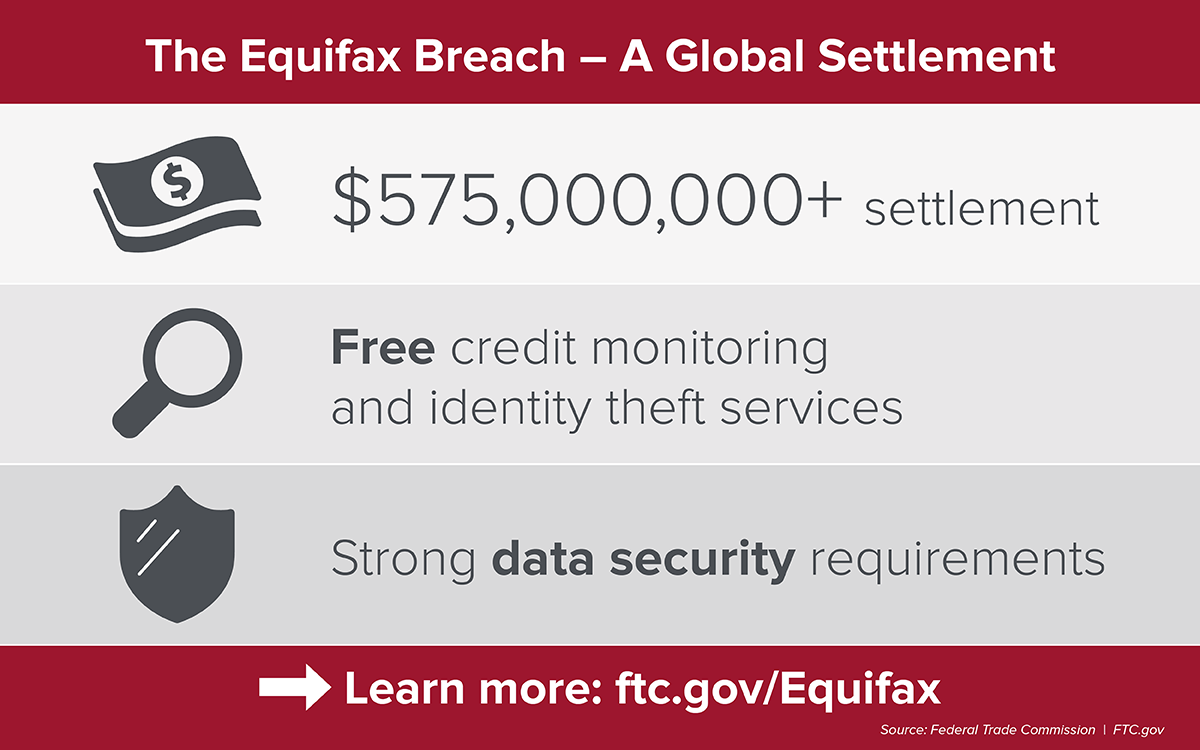
But there’s a downside to this unexpected number of claims. First, though, the good: all 147 million people can ask for and get free credit monitoring. There’s also the option for people who certify that they already have credit monitoring to claim up to $125 instead. But the pot of money that pays for that part of the settlement is $31 million. A large number of claims for cash instead of credit monitoring means only one thing: each person who takes the money option will wind up only getting a small amount of money. Nowhere near the $125 they could have gotten if there hadn’t been such an enormous number of claims filed.
So, if you haven’t submitted your claim yet, think about opting for the free credit monitoring instead. Frankly, the free credit monitoring is worth a lot more – the market value would be hundreds of dollars a year. And this monitoring service is probably stronger and more helpful than any you may have already, because it monitors your credit report at all three nationwide credit reporting agencies, and it comes with up to $1 million in identity theft insurance and individualized identity restoration services.
For those who have already submitted claims for this cash payment, look for an email from the settlement administrator. They’ll be asking you for the name of the credit monitoring service you already have. Or, if you want to change your mind, you’ll have a chance to switch to the free credit monitoring. You can also email the settlement administrator, JND, at info@EquifaxBreachSettlement.
Please also note that there is still money available under the settlement to reimburse people for what they paid out of their pocket to recover from the breach. Say you had to pay for your own credit freezes after the breach, or you hired someone to help you deal with identity theft. The settlement has a larger pool of money for just those people. If you’re one of them, use your documents to submit your claim.
FTC Alert - Capital One data breach: Time to check your credit report
July 30, 2019
by Seena Gressin
Attorney, Division of Consumer and Business Education
If you needed yet another nudge to start keeping an eye on your credit report to protect against identity theft, Capital One has delivered it with its announcement that a data breach has exposed the personal information of 106 million of its credit card customers and credit card applicants in the United States and Canada.
News of the Capital One breach comes just one week after the Federal Trade Commission announced that Equifax agreed to pay up to $700 million to settle a lawsuit brought by the FTC, the Consumer Financial Protection Bureau, and 50 states and territories, stemming from the credit reporting giant’s 2017 data breach, which affected about 147 million people.
In the Capital One breach, 100 million people in the United States and 6 million in Canada were affected. According to the bank, most of the stolen information came from the credit card applications of consumers and small businesses. The information includes names, dates of birth, addresses, phone numbers, and more, all from applications filed between 2005 and early 2019.
For credit card holders, the stolen information includes credit scores, credit limits, balances, payment history, contact information and some transaction data. The bank says the hacker also stole about 140,000 Social Security numbers, 80,000 linked bank account numbers of secured credit card holders, as well as the Social Insurance Numbers of about one million Canadians.
Capital One has posted information about the breach and says it will notify the people affected and offer them free credit monitoring and identity protection services. However, whether or not you were affected, there is no time like the present to check your free credit report and take other steps to protect against identity theft.
Check out these articles to read the basics about credit reports and credit monitoring. And one more thing: a data breach is a magnet for scammers. Be alert to emails and calls pretending to be from Capital One or the government. Neither the bank nor the government will send an email or call you to ask for credit card or account information or your Social Security number.
Visit Identitytheft.gov/databreach to learn more about protecting yourself after a data breach.
FTC: Equifax Data Breach Settlement: How to Claim Your Benefits
July 25, 2019
by Alvaro Puig
Consumer Education Specialist, FTC
Earlier this week, we told you that roughly half the people in the country can get benefits under a settlement that the FTC and others reached with Equifax. Now, you can now find out if you were affected by the September 2017 breach and make your claim for benefits.
Start at ftc.gov/Equifax. There, you can use a tool to find out if your information – like your Social Security number (SSN) – was exposed in the breach, learn about benefits, and start your claim to get free credit monitoring and maybe even cash. If your info was exposed in the breach, the settlement will give you up to 10 years of free credit monitoring. That means you’ll get an alert whenever somebody checks your credit history, opens a new loan or credit card in your name, or says a payment is late. So if somebody has, say, your SSN and tries to use it to get a loan, this free credit monitoring service would let you know right away.
That’s the kind of information that might make a real difference when you apply for a job, try to rent an apartment, or apply for credit.
And a word on the cash: there are several ways to get reimbursed for the time or money you spent dealing with the after-effects of the breach. Read more at ftc.gov/Equifax, but here’s something to consider. To get paid back for up to ten hours of your time, you just need to say what you were doing for those ten hours.
FTC Alert: Equifax Data Breach Settlement: What You Should Know
July 22, 2019, by Alvaro Puig
Consumer Education Specialist, FTC
In September of 2017, Equifax announced a data breach that exposed the personal information of 147 million people. Under a settlement filed today, Equifax agreed to spend up to $425 million to help people affected by the data breach. If you were affected by the Equifax breach, you can't file a claim just yet. That's coming. But you can sign up for FTC email alerts about the settlement at ftc.gov/Equifax.
(Not sure that you were affected? The breach claims site will have a tool to let you check. Sign up for an FTC email update to find out when that tool is up and running.)

Here’s what you need to know about the settlement.
Benefits Available To You
If you were affected by the breach, you may be eligible for benefits.1. Free Credit Monitoring or $125 Cash Payment
You can get at least 4 years of free credit monitoring of your credit report at all three credit bureaus (Equifax, Experian, and TransUnion). On top of that, you can get up to 6 more years of free credit monitoring of your Equifax credit report. That’s a total of 10 years of free credit monitoring. (Minors affected by the breach are eligible for even more free credit monitoring.)If you have credit monitoring that will continue for at least 6 months and you decide not to enroll in the free credit monitoring offered in the settlement, you may be eligible for a cash payment of $125.
2. Reimbursement for Your Time and Other Cash Payments
You may be eligible for reimbursement and cash payments up to $20,000 for:- time you spent protecting your identity or recovering from identity theft, up to 20 hours at $25 per hour
- money you spent protecting your identity or recovering from identity theft, like the cost of freezing or unfreezing your credit report or unauthorized charges to your accounts
- up to 25% of the cost of Equifax credit monitoring or identity protection products you bought between September 7, 2016 and September 7, 2017
3. Free Identity Restoration Services
You are eligible for free identity restoration services for at least 7 years that you can use if someone steals your identity or you experience fraud.Next Steps
The claims process will start after court approval. To learn more about the settlement, go to ftc.gov/Equifax. We’ll update that page when there’s new information.You can also sign up to get FTC email updates about this settlement.
If you were affected by the breach, you may also receive an email notification after the court approves the settlement. The notification will provide more information about the settlement, the benefits available to people impacted, and how to request the services offered under the settlement.

Wednesday, July 24, 2019
Facebook Users Alert: July 24th,'19, What the FTC Facebook settlement means for consumers
July 24, 2019
by Lesley Fair
Attorney, Division of Consumer & Business Education, FTC
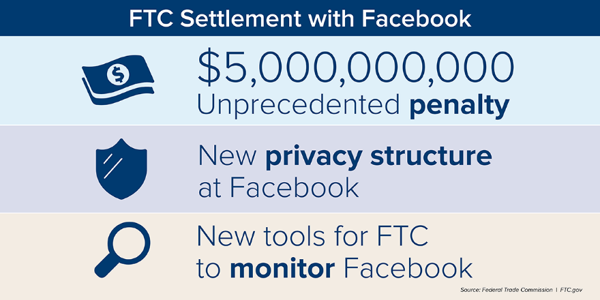
The next time users visit Facebook, things might not look different, but big changes are brewing behind the scenes. The FTC’s record-breaking $5 billion settlement requires Facebook to conduct a massive overhaul of its consumer privacy practices. The settlement also makes major changes to Facebook’s operations and CEO Mark Zuckerberg no longer has sole control over privacy.
First, some background. Facebook is a social networking site, but it makes money by serving up targeted ads based on users’ personal information. Many consumers are hesitant about sharing certain data, so Facebook calms that concern by promising that people can control the privacy of their information through the platform’s privacy settings.

The FTC sued Facebook in 2012 for making misleading promises about the extent to which consumers could keep their personal information private. For example, Facebook told users they could select settings to make information available just to “friends.” But despite that promise, Facebook allowed apps used by those friends to access consumers’ information, a decision that put money in Facebook’s pocket. The 2012 FTC order put penalties in place if Facebook made misleading statements in the future about consumers’ control over the privacy of their personal information.
According to the FTC, that’s just what happened. Facebook violated the order by again giving companies access to information that consumers said they didn’t want to share. The FTC also alleges Facebook made other misleading statements about how it used facial recognition, consumers’ cell phone numbers, and other personal data.
Here are three things to know about the FTC’s history-making settlement with Facebook.
Facebook will pay the largest civil penalty by anyone anywhere ever in a privacy case.
The $5 billion settlement is one for the record books. It’s the largest civil penalty ever imposed on a company for violating consumers’ privacy and it’s one of the largest penalties assessed by the U.S. government for a violation of any kind. That tells you just how seriously the FTC takes it when companies break their privacy promises. The settlement also sets a new benchmark if companies fail to honor their promises in the future. (In case you’re wondering about the $5 billion, by law, it goes to the general fund of the U.S. Treasury. It does not go to the FTC.)The settlement requires fundamental changes at Facebook and removes CEO Mark Zuckerberg as the company’s consumer privacy decision maker.
The order establishes a new era of privacy transparency at Facebook and at WhatsApp and Instagram, which Facebook owns. It creates an independent committee of Facebook’s board of directors to oversee privacy decisions and requires an independent third-party assessor to evaluate the effectiveness of Facebook’s privacy program. Mark Zuckerberg also must certify every quarter that Facebook is in compliance with the new privacy program. Any false certification will be subject to civil – and criminal – penalties.As Facebook puts its new privacy program in place, consumers should take a fresh look at their settings.
How much personal information do you really want to share? A platform’s default settings may not be your most privacy-protective option. Whether it’s Facebook or any other platform, revisit your toolbars, privacy settings, etc., to make sure the system is set up to honor your choices and preferences.Thursday, June 13, 2019
FTC - Update your computer / smart phone software
FTC - Update your software now
June 13, 2019, by Ari Lazarus
Consumer Education Specialist, FTC
We secure our valuables – our wallets, keys, and homes. We know that, if left unsecured, they can easily be a target for criminals. So it makes sense to think the same way about the information stored on all our devices.
Computers, tablets, phones and other personal devices hold your emails and your financial and tax documents (with your Social Security numbers). Criminals who get access to this valuable information can commit identity theft, put harmful software on your devices, or both.
What’s one easy way to help protect all of this sensitive information? Update your software regularly, and as soon as possible when a newer version comes out. What’s an even easier way? Set the updates to happen automatically. Don’t ignore reminders to update. Criminals look to exploit vulnerabilities before the software companies can fix it. Delaying gives hackers time to access your information – even when a patch is out there to lock them out.
So what software should you be updating?
- Security software. Whether you use antivirus or firewall programs that were pre-installed on your device or that you bought on your own, make sure they’re up to date.
- Operating system software. Your operating system could be Windows, Apple OS, etc. If you’re not sure how to update your operating system, go to the website of your device manufacturer for help.
- Internet browsers and apps. Both are access points for criminals to enter your devices, so it’s important to keep them secure.
US Postal Service program " Informed Delivery" - Protect your address from mail theft
R. Coleman, PSCC, Pittsfield Twp. MI .,DPS, Crime Prevention observation of " Informed Delivery".
Over the last two weeks "Informed Delivery" has been in the news based on the ID Theft and the November 2018, report by the Secret Service of the arrest of seven (7) individuals in West Michigan involved with stealing ID information and creating credit cards to commit fraud.
It's reported that the individuals used Informed Delivery notification (digitally preview of mail online) for notification of the mail being delivered to the box before the homeowner retrieved their mail.
KrebsOnlineSecurity (https://krebsonsecurity.com/tag/informed-delivery/) has done extensive research on this issue .
While doing the research I went online to sign up to protect my address. There are several concerns I noticed on the site they ask for you to ID your self and respond to basic security questions that answers can be found on social media sites and for your personal "cell number" to verify that its you.
I wouldn't recommend putting your cell number in this program, in the fine print they advise that they will sell it to 3rd party vendors which means unwanted calls to buy products or services. I opted for the hard copy to be mailed to my home with the code which came one week later.
Attached is one of several articles on this concern and there are others publish by cyber security experts that can be found online. I've also attached a link to the UPS website with details. I would recommend that homeowners speak with their local Post Master about this program but most of all "protect your address".
Scammers
using USPS ‘Informed Delivery’ service to assist in Identity Theft and Fraud
By privacyrights.org
US Postal Service - Informed-Delivery-The-Basics
Over the last two weeks "Informed Delivery" has been in the news based on the ID Theft and the November 2018, report by the Secret Service of the arrest of seven (7) individuals in West Michigan involved with stealing ID information and creating credit cards to commit fraud.
It's reported that the individuals used Informed Delivery notification (digitally preview of mail online) for notification of the mail being delivered to the box before the homeowner retrieved their mail.
KrebsOnlineSecurity (https://krebsonsecurity.com/tag/informed-delivery/) has done extensive research on this issue .
While doing the research I went online to sign up to protect my address. There are several concerns I noticed on the site they ask for you to ID your self and respond to basic security questions that answers can be found on social media sites and for your personal "cell number" to verify that its you.
I wouldn't recommend putting your cell number in this program, in the fine print they advise that they will sell it to 3rd party vendors which means unwanted calls to buy products or services. I opted for the hard copy to be mailed to my home with the code which came one week later.
Attached is one of several articles on this concern and there are others publish by cyber security experts that can be found online. I've also attached a link to the UPS website with details. I would recommend that homeowners speak with their local Post Master about this program but most of all "protect your address".
Scammers
using USPS ‘Informed Delivery’ service to assist in Identity Theft and Fraud
November 18, 2018
By privacyrights.org
A
little known service offered by the United States Postal Service (USPS) is
helping criminals commit identity theft. USPS’s Informed Delivery service enables most residential postal
customers to digitally preview their mail online on the morning of delivery.
Signing
up for USPS’s Informed Delivery service requires providing your name, address
and email. To validate your identity, you must answer four
multiple-choice knowledge-based
authentication (KBA) questions. Unfortunately, KBA is an
unreliable method for authentication because the answers to many of these
questions are available through data broker and social networking sites or from
information leaked in data breaches. This provides an opportunity for criminals
to create an account in your name.
According
to an internal U.S. Secret Service Alert, Informed Delivery is being used by
criminals “to identify and intercept mail, and to further their identity theft
fraud schemes.” In addition to monitoring your mailbox for other important and
valuable mail to steal, this means a thief could.
1. apply for a credit
card in your name
2. have it sent to your
home address
3. steal it before you
are able to retrieve your mail by using Informed Delivery to find out when the
credit card will be delivered to your home
Here
are some steps you can take to help prevent this from happening:
·
either
sign up for Informed Delivery so you can monitor your own mail or request that
it be blocked by sending an email to eSAFE@usps.gov with your name, address, phone number
and email address
·
use
a locked mailbox
US Postal Service - Informed-Delivery-The-Basics
Subscribe to:
Posts (Atom)


